|  | Welcome to guidebook, a website dedicated to preserving and showcasing Graphical User Interfaces, as well as various materials related to them.
|  |
| |
| | Site last updated on 6th October 2006:
| |
| |
| | New set of posters with mouse pointers:
|  |  |
| |
| |
| | | In late 1999 Apple discontinued the British English localized version of Mac OS 9, causing quite an uproar among UK users. The changes between UK and US editions included “Wastebasket” instead of “Trash,” in addition to the obvious spelling differences such as “Colours” instead of “Colors.” |
| |
| |
|
| |  | This is one of the most popular editions of this largely unknown GUI for British Acorn Archimedes machines. It features some very interesting mechanisms, such as the icon bar at the bottom of the screen (years before Windows 95), unique pop-up menus and interesting use of drag and drop throughout the GUI.
 |
| |
| |
| |  | GUIs weren’t always so forgiving as Windows XP when you typed in an incorrect password. And they haven’t always warned you when you accidentally pressed Caps Lock. Check out how other systems react to password-related mistakes.
 |
| |
| |
| | 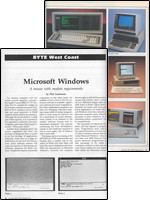 | Byte covered Windows for the first time almost two years before its premiere. Naturally, there’ve been many interesting differences between what was described and what shipped in the final product. On top of that, the article featured a dozen screenshots and as many pictures of contemporary machines running the pre-release version of Windows. See the humble beginnings of today’s most popular GUI, and read author’s unique commentary written 21 years later!
 |
| |
| |
|